
Special Episode Release – A Trail of Breadcrumbs: Getting to the Source of Your Black Speck Issue
While we get ready for the next season of the Transmission Control Podcast, we’re featuring episodes from Beyond Clean’s “What the Speck?” series, sponsored by Aesculap. Enjoy!
Behind every black speck is a process, a piece of equipment, or a hidden culprit waiting to be discovered. In this episode of “What the Speck?,” SPD professional and consultant Warren Nist joins us to discuss how departments can move beyond identifying debris and begin uncovering the root cause behind it. From quality reports and workflow data to full department risk assessments, Warren walks through how experienced SPD teams track contamination back to its source. We also uncover some surprising culprits—from worn equipment components to debris hiding inside washers, carts, and even on hospital floors. If your team is trying to connect the dots and eliminate the problem for good, this episode offers a practical roadmap for getting there.
A special thanks to our sponsor, Aesculap®, for supporting this podcast series!
#TransmissionControl #BeyondClean #Aesculap #SterileProcessing #WhatTheSpeck #BlackSpecks #SurgicalTrays #Podcast
Special Episode Release – From Speck to Source: What Exactly Is a “Black Speck?”
While we get ready for the next season of the Transmission Control Podcast, we’re featuring episodes from Beyond Clean’s “What the Speck?” series, sponsored by Aesculap. Enjoy!
When a black speck shows up in a surgical tray, the first question is simple: “What is it?” But as many Sterile Processing teams discover, the answer is anything but straightforward. On this episode of “What the Speck?,” global reprocessing expert Dr. Gerhard Kirmse from Aesculap joins us to explore the science of identifying this pesky, unidentified debris and to tackle the question at the center of the mystery: “What exactly is a black speck?” From microscopic analysis and lab testing to on-site investigations inside washers, sterilizers, and steam systems, Dr. Kirmse explains how experts piece together the clues to uncover the real source behind these particles. Tune in to discover how science, collaboration, and a little detective work come together to solve one of SPD’s most frustrating mysteries.
A special thanks to our sponsor, Aesculap®, for supporting this podcast series!
#TransmissionControl #BeyondClean #Aesculap #SterileProcessing #WhatTheSpeck #BlackSpecks #SurgicalTrays #Podcast
Special Episode Release – Black Specks, Big Consequences: Exploring the Challenges of…
While we get ready for the next season of the Transmission Control Podcast, we’re featuring episodes from Beyond Clean’s What the Speck? series, sponsored by Aesculap. Enjoy!
Every #CleanFreak has seen them at least once—those mysterious black specks appearing in surgical trays with no clear explanation. But are they just a nuisance… or a warning sign of something bigger? In Episode 1 of our brand-new podcast series “What the Speck?,” host Bobby Parker welcomes Alex Miseirvitch, Senior Product Manager for Rigid Sterile Containers at Aesculap®, to explore the mystery—and real challenges—behind unidentified debris in sterile trays. From potential patient safety risks to the operational strain of tray contamination and case delays, these tiny particles can create ripple effects across the entire surgical workflow. If your team has ever asked, “What is this—and where did it come from?” this episode is the perfect place to start!
A special thanks to our sponsor, Aesculap®, for supporting this podcast series!
#TransmissionControl #BeyondClean #Aesculap #SterileProcessing #WhatTheSpeck #BlackSpecks #SurgicalTrays #Podcast
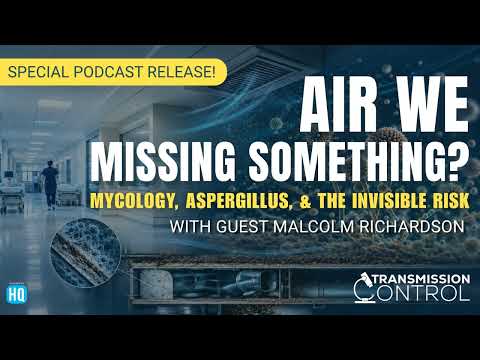
Air We Missing Something? Mycology, Aspergillus, & the Invisible Risk
Fungi are everywhere, but in healthcare, they’re often an afterthought. In this episode of Transmission Control, we sit down with internationally recognized medical mycologist Malcolm Richardson to explore the hidden role fungal pathogens play in patient safety. From Aspergillus lurking in dust, ventilation systems, and water-damaged environments to the growing challenge of antifungal resistance, the conversation sheds light on risks that rarely make it into everyday infection prevention discussions. Drawing on more than 50 years of experience in clinical and environmental mycology, Malcolm explains why fungal threats deserve a seat at the infection prevention table, how healthcare facilities can reduce airborne fungal risk, and where current surveillance methods fall short. The episode also looks ahead to emerging technologies that could transform air quality monitoring from a reactive exercise into a proactive patient safety strategy.
If bacteria and viruses dominate the conversation, this episode asks an important question: What are we missing by overlooking fungi?
#TransmissionControl #InfectionPrevention #Pathogens #Mycology #Fungi #Aspergillus #Bacteria #AirbornRisks #Technology #Monitoring #PatientSafety #Safety
Season 1 Rewind – Endoscopic Infections: Critical Conversations Prompting the Multisociety…
A new season of Transmission Control is on the horizon! Until then, enjoy a few favorites from the archives.
Given the rising concerns of endoscope-related infections around the country, organizations, agencies, and providers believed it was imperative to evaluate the current literature and standards for endoscope reprocessing. Joining us for this week’s episode of Transmission Control, Dr. Raman Muthusamy joins Dr. Lawrence Muscarella and Justin Poulin to discuss the critical updates made to the Multisociety Guidelines for Reprocessing Flexible GI Scopes in the early 2021. These updates have helped to reduce confusion about how to navigate conflicting industry guidelines and recommendations from various organizations, but ongoing updates are necessary as the industry continues to explore the many factors that have resulted in “superbug” outbreaks. Dr. Raman Muthusamy has been front and center in this conversation, is co-author of the multisociety guideline document. In this interview he shares his knowledge of the recent updates to the guidelines (such as facility based risk assessments), the discussion around sterilization versus high level disinfection, and standards of care that are population based rather than universal.
To subscribe to the Transmission Control podcast and catch our future episodes releasing every other week visit:
Apple Podcasts: https://podcasts.apple.com/podcast/id1570808792
Spotify: https://open.spotify.com/show/0jpO4r4RvFIfoMVcx7yln2?si=x_pDH2EjTLClpgNT2TC67w
Or follow us on social media at:
Facebook: https://www.facebook.com/Transmission-Control-103851988489519
Linkedin: https://www.linkedin.com/company/transmissioncontrol/
#GI #Endoscopes #Guidelines #Multi-Society #SuperBug #Outbreaks #FlexibleScopes #TransmissionControl #Podcast #Education #IPT #InfectionPrevention #InfectionControl #Infection #PublicHealth #Healthcare
Season 1 Rewind – Fixated on Flexible Scopes: Reviewing Dry time and Alcohol Flush Research
A new season of Transmission Control is on the horizon! Until then, enjoy a few favorites from the archives.
Endoscope drying times and the use of an alcohol rinse has become an area for debate and emerging research is increasing with each passing day. Advanced inspection technology such as borescopes and the development of ATP testing offer additional measures to evaluate the effectiveness of cleaning the small diameter working channels of flexible scopes. On this episode of Transmission Control, Nancy Robinson, Ph.D, and Tamara Behm, MSN, RN, CIC, FAPIC, CER, CQIA, CCSVP, from STERIS Infection Prevention Technologies join hosts Justin Poulin and Dr. Larry Muscarella to discuss recent research that was published in the American Journal of Infection Control. We explore current standards and put them up against real world application, discovering gaps and outline some potential changes to increase compliance and patient safety. Our guests also explain the impact that channel design and air pressure have on the drying process and the pros and cons of using and alcohol flush. If you’re involved with endoscopes, you’ll want to be involved in this episode!
To subscribe to the Transmission Control podcast and catch our future episodes releasing every other week visit:
Apple Podcasts -> http://bit.ly/TCPod-Apple Amazon Podcasts -> http://bit.ly/ TCPod-Amazon Google Podcasts -> http://bit.ly/TCPod-Google iHeartRadio -> http://bit.ly/TCPod-iHeartRadio Spotify -> http://bit.ly/TCPod-Spotify Stitcher -> http://bit.ly/TCPod-Stitcher #FlexibleScope #GI #Gastrointestinal #WorkingChannels #Cleaning #DryTime #SuperBugs #IP #IC #TransmissionControl #Podcast #Education #IPT #InfectionPrevention #InfectionControl #Infection #PublicHealth #Healthcare
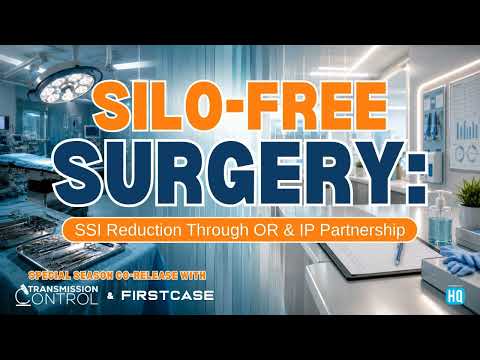
Silo-Free Surgery: Beyond the Bundle: What IPs Need to See Before, During, and After Surgery
All season long, we’ve been breaking down the silos between the OR and Infection Prevention teams. So where do we go from here? In this “Silo-Free Surgery” season finale episode, Garrett Hollembeak and Lindsey Joyce are joined by Maureen Spencer and Peter Graves to talk about what it takes to turn collaboration into action. They discuss why effective SSI prevention means looking beyond policies and bundles to observe what’s really happening before, during, and after surgery. From outdated policies and overlooked environmental risks to direct observation and surgical stewardship, Maureen and Peter challenge teams to bring the right people to the table and take shared ownership of safer surgical care. The season may be ending, but the work of breaking down silos is just getting started. Tune in today!
Thanks for tuning in to “Silo-Free Surgery!” We’ll see you soon for another season of the Transmission Control and First Case podcasts.
Make sure to follow us on your favorite podcast app, LinkedIn, and Facebook so you never miss an episode!
#TransmissionControl #FirstCase #OperatingRoom #InfectionPrevention #SiloFreeSurgery #SSI #SafeSurgery #Collaboration #SSIPrevention #Policies
Silo-Free Surgery: Say It, Don’t Delay It: Speaking Up to Prevent Surgical Site Infections
When something doesn’t look right in the OR, do you have the confidence to speak up? In this episode of “Silo-Free Surgery,” Garrett Hollembeak sits down with certified surgical technologist, educator, and infection preventionist Julia Jackson to talk about the role surgical conscience plays in protecting patients and preventing surgical site infections. From protecting the sterile field to slowing down for a meaningful timeout and questioning something that doesn’t look right, Julia shares why doing the right thing in the moment matters, even when it isn’t always easy. If you’ve ever hesitated to speak up in the OR, this episode is a powerful reminder of why your voice matters.
Make sure to follow Transmission Control and First Case on your favorite podcast app, LinkedIn, and Facebook so you never miss an episode!
#TransmissionControl #FirstCase #OperatingRoom #InfectionPrevention #SiloFreeSurgery #SSI #PatientSafety #Timeout #SpeakingUp #SurgicalConscience
Silo-Free Surgery: PATOS Without the Panic: Understanding “Present at Time of Surgery” in…
The OR sees one thing. Infection Prevention reports another. So who’s right? In this episode of “Silo-Free Surgery,” hosts Garrett Hollembeak and Trey Morrow are joined by infection prevention expert Emily Barnard to tackle one of the trickier parts of SSI surveillance: PATOS, or “present at time of surgery.” Emily breaks down the difference between clinical and surveillance definitions, why the right documentation matters, and how seemingly small details in the operative note can make all the difference in accurate SSI reporting. From wound classification to the very specific language behind PATOS criteria, this conversation shows why OR and IP teams need a shared understanding of what they’re seeing and documenting. If PATOS has ever caused confusion in your facility, this conversation is for you!
Make sure to follow Transmission Control and First Case on your favorite podcast app, LinkedIn, and Facebook so you never miss an episode!
#TransmissionControl #FirstCase #OperatingRoom #InfectionPrevention #SiloFreeSurgery #SSI #PATOS #SurgicalSafety #Documentation #Reporting